In September 2025, Engineering X and the World Forum Offshore Wind partnered up to establish an international End-of-Life Committee for Offshore Wind - a neutral, expert-led platform.
The Committee offers a much-needed overarching view of current end-of-life efforts, bringing together diverse voices from across geographies and disciplines.
How the EoL Committee works
The End-of-Life (EoL) Committee is set up to enable better end-of-use approaches for offshore wind infrastructure, globally. It does this in two main ways:
- Providing the sector with a forum for knowledge exchange, coordination and advocacy for end-of-use solutions.
- Driving proactive work on priority areas where action is most urgent and impactful due to wide applicability regionally and foundational importance for other end-of-use processes.
Four core principles guide the Committee's work across activities: safety, sustainability, circularity, and inclusive leadership.
Find out more about the need and ambition for the EoL Committee by reading the Co-Chairs blog.
EoL Committee Chairs
The EoL Committee is co-chaired by two pioneers in sustainability and circular economy for wind infrastructure:

Lorna Bennet
Senior Engineer in Sustainability | Offshore Renewable Energy Catapult
Lorna leads circular economy and sustainability projects at the Offshore Renewable Energy Catapult, drawing on her broad technical experience and strong sector-wide connections. She champions young people to pursue engineering careers.
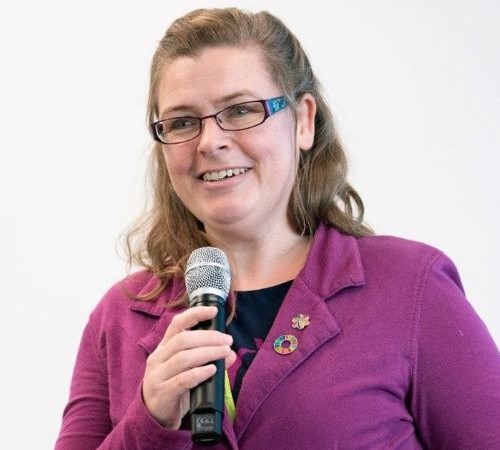
Dr Anne Velenturf
Independent research consultant | The Circularity Collective
Anne is a leading researcher and practitioner facilitating sustainability transitions in the area of circular economy, with inter-disciplinary expertise across the offshore wind lifecycle, policy, and supply chain.
Task & Finish Groups
The EoL Committee has set up four Task and Finish Groups to drive proactive work on priority areas where action is most urgent and impactful. The Task & Finish Groups are specialist, time-bound working groups established to deliver focused outputs on high-priority areas.
Early expert consultation identified four EoL areas with wide applicability across regions and maturity levels of offshore wind and that are foundational for other EoL processes:
- International regulation
- Industry standards
- Benchmarking best practice
- Material flow forecasting methods
Who? Cross‑sector specialists working together to identify gaps and opportunities, develop targeted outputs such as guidelines and advocacy materials, capture and share existing best practice, and support safer, more sustainable, circular, and inclusive end‑of‑life practices for offshore wind infrastructure.
What? Deliver action plans focused on priority activities that address the most urgent end‑of‑life gaps and accelerate progress on focus areas. The action plans draw on insights from a baseline review of existing end‑of‑life activity and an international expert workshop held in January 2026.
How? Until end of 2026, the Task and Finish Groups will collate insights on international regulation, map relevant standards, and share practical knowledge on engaging in standards‑development processes. They convene webinars to enable exchange between regulators, develop advocacy materials, identify transferable learning from other sectors, and produce guidelines to pilot a benchmarking approach.
The International regulation Task and Finish Group brings together insights from current (inter)national governance practices for sustainability, circular economy, safety and inclusion in end-of-use management in offshore wind, and distils key points for regulatory standards and global agreement.
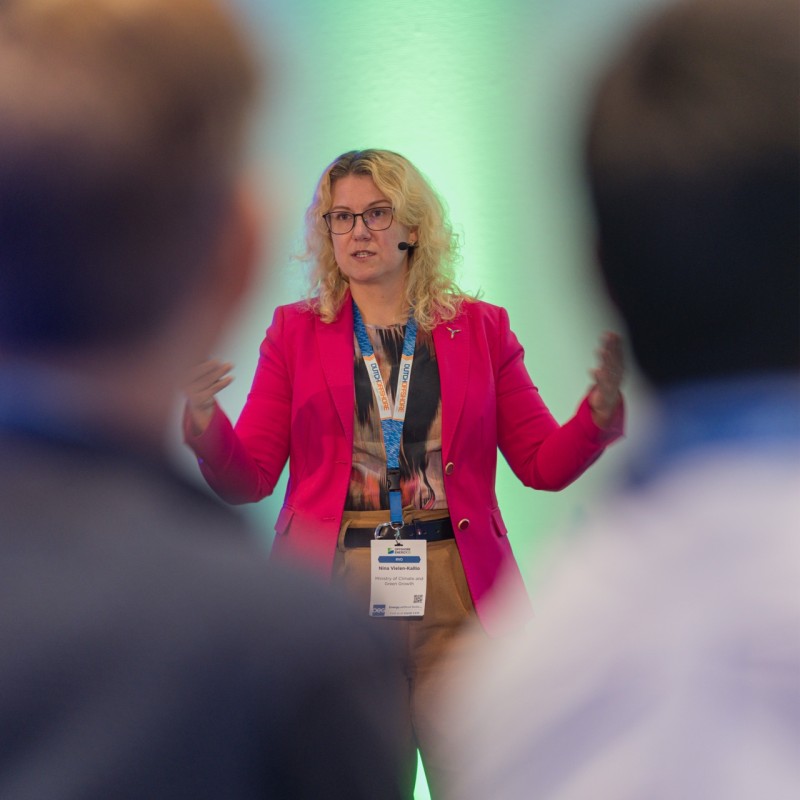
Chair: Nina Vielen-Kallio | Senior sustainability leader
Nina works at the intersection of industry, policy, and innovation to turn circularity and sustainability from high-level vision into competitive advantage.
She has been awarded for her engagement with stakeholders leading to the implementation of circularity in Dutch Offshore Wind tenders and currently also chairs the development of the Roadmap for Circular Offshore Wind for the Dutch Ministry. Nina is an invited speaker and panellist on circularity, resilience, and digitalisation, and actively inspires the sector towards sustainable and strategic value creation.
The Industry standards Task and Finish Group aims to bring together insights from current governance practices through standards for sustainability, circular economy, safety and inclusion in end-of-use management, and to distil key points for consideration in the creation of offshore wind industry standards.

Chair: Mary Harvey | Manager, The Carbon Trust
Mary is a sustainability pioneer, leading on topics related to decarbonising the offshore wind industry for The Carbon Trust. She manages the Sustainability Joint Industry Programme (SUSJIP), bringing her expertise in establishing and managing joint industry programmes to tackle common challenges.
Her engagement with stakeholders has awarded her advisory roles, delivering projects for governments and public bodies on offshore wind market planning and policy. She works across both mature and emerging offshore wind markets, contributing to advisory projects in the UK, US, India, Philippines and the Caribbean. She is an invited speaker and panellist on sustainability, decarbonisation, and non-price criteria, and actively inspiring the sector towards designing a sustainable and effective offshore wind market.
This Benchmarking best practice Task and Finish Group aims to set a benchmark for what good looks like in offshore wind end of use practice. It prepares guidelines with a set of indicators covering the EoL Committee's core values: sustainability, safety, circular economy and inclusion. The group consults with stakeholders to input into an indicator framework and will also explore how its use can be incentivised.

Chair: Dr Mitchell Rencheck | Research engineer, EPRI
Mitch is a Senior Research Engineer at EPRI focused on focused on materials engineering, circular economy development, recycling, and energy generation technologies.
He was awarded a SAMPE NA Young Professional Emerging Leader Award in 2023. Mitch leads collaborative end-of-life management and circularity R&D for wind and solar energy at EPRI, and plays a leading role in knowledge exchange for the IEA Wind Task 45 on blade recycling.
This Material flow forecasting methods Task and Finish Group aims to link material flow modelling to circular supply chain development by outlining use cases and highlighting how policy and industry developments can support and influence progress.
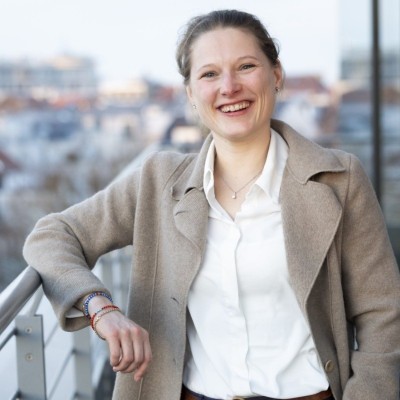
Chair: Dr Kathrin Kramer | Independent circularity & sustainability advisor
Kathrin has over 10 years of experience in the renewable energy sector and 5 years in circular economy, including strategic planning, business development, investment and project management. She is committed to supporting the transition to a sustainable and cost-effective energy system and industry.
As an independent consultant, Kathrin supports companies and political institutions in developing and scaling circular supply chains in the wind industry, primarily in Europe. She collaborates with stakeholders across the wind turbine value chain, developing material flow models for supply chain actors, through the rigorous application of qualitative and quantitative research methods.
Founding Partners