
Meet our alumni from Thailand
Explore the inspiring projects in Thailand funded through Transforming Systems through Partnership (TSP) grant calls below. These projects received up to £50,000 each for a year of research collaboration and knowledge sharing between Thailand and the UK. All projects were supported in partnership with PMU-C in Thailand, with ODA funding under the UK government International Science Partnership Fund. This grant is currently closed.
Novel micro-monolith reactor for efficient conversion of waste CH4 and CO2 into valuable chemicals using renewable electricity
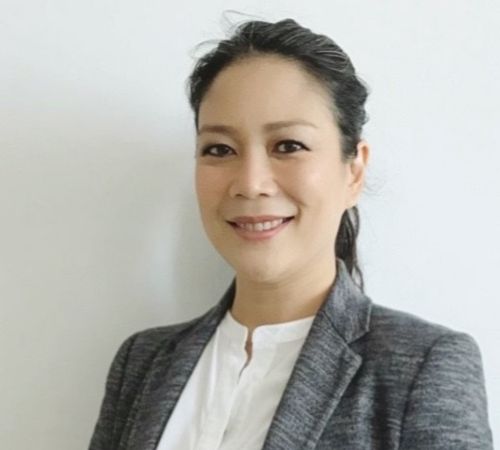
Unalome Wetwatana Hartley | King Mongkut's University of Technology
UK Project lead:
-
Prof Kang Li | Imperial College London
Industry partner:
-
SCG (Siam Cement Group)
This project used renewable electricity to co-valorise methane and CO₂ with a compact electrochemical membrane reactor. This innovative technology converts waste methane, CO₂, and intermittent electricity into valuable products in a single step.
Project tasks included selecting catalysts, fabricating reactors with new technology, and testing in relevant environments. Key outputs included identifying suitable catalysts, evaluating process performance, and organising a round table conference to foster collaboration. Aligned with Thailand's BCG model, the project goal was to enhance global quality of life, reduce industrial waste, and promote greener chemical production.
By integrating renewable electricity and innovative catalytic processes, the contributed to a sustainable and environmentally friendly future, benefiting both the global population and the Thai community.
Biogas Empowerment: Accelerating Community Grids and Collaborative Networks in Thailand (BEACON)
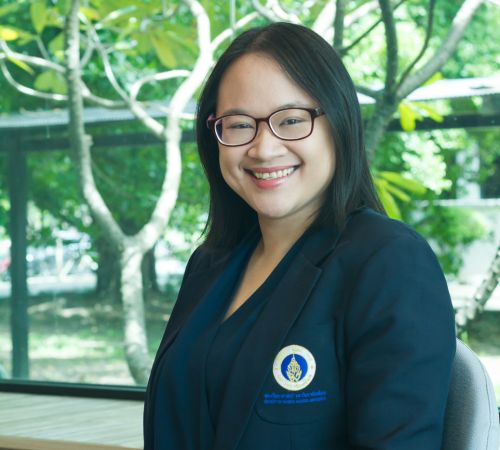
Dr Trakarn Prapaspongsa | Mahidol University
UK Project lead:
-
Dr Davide Poggio | University of Sheffield
Industry partner:
-
Pattanasiri Engineering Limited Partnership
The BEACON project, a collaboration between Thailand and the UK, aimed to enhance biogas production and utilisation in Thailand.
It focused on optimising biogas yields by assessing ideal feedstock combinations, analysing the feasibility of community biogas grids, and promoting stakeholder engagement and knowledge transfer. Organised into four work packages, the project encompassed engineering research, feasibility studies, industry collaboration, and skills development.
Key outputs included the development of tools for biogas yield optimisation and community grid development, as well as educational programmes to enhance industry skills and knowledge. Through joint efforts, UK and Thai partners effectively addressed biogas challenges , providing practical solutions and laying the groundwork for future energy collaborations between the two nations.
Measurement of residual stresses and porosity studies on corrosion resistance of protective coatings for offshore wind turbine foundations using thermal spray technology
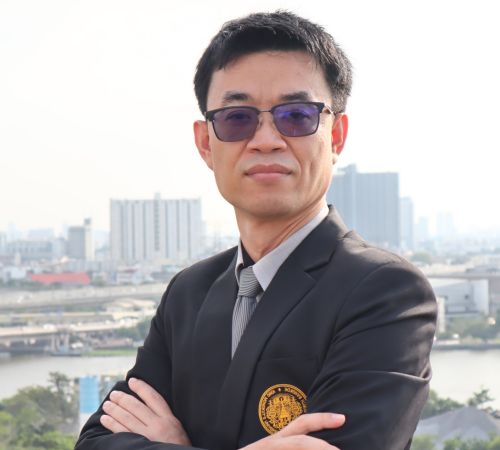
Dr Peerawatt Nunthavarawong | King Mongkut's University of Technology
UK Project lead:
-
Professor Michael Fitzpatrick | Coventry University
Industry partner:
-
Advance Surface Technology Co. Ltd
The project evaluated the function of thermal spray coatings as a preventative measure for onshore and offshore wind turbine foundations, known as monopiles. It covered residual stress measurement, the impact of coating porosity on corrosion, and simulations of corrosion resistance. Synchrotron X-ray Diffraction (S-XRD) assessed residual stresses resulting from mechanical processes and microstructural phase changes.
The comprehensive study combed sophisticated simulation methods with laboratory experiments, focusing on their ability to tolerate residual stresses, thwart corrosion, and address porosity issues. Results could have significant applications, potentially enhancing reliability and affordability in the offshore wind energy industry. This research contributes to ongoing initiatives for sustainable harnessing of renewable energy sources, meeting global energy demands while mitigating the effects of climate change.
Fabrication of nanosilver doped activated carbon into high-efficiency car air filter
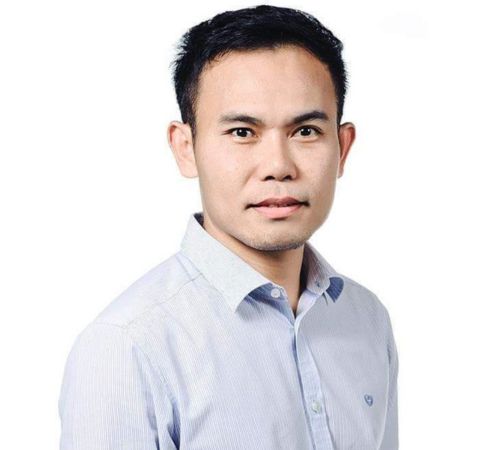
Dr Pongtanawat Khemthong |
National Nanotechnology Center, National Science and Technology Development Agency
UK Project lead:
-
Professor Gopinathan Sankar | UCL
Industry partner:
-
Brainstorm Engineering & Research Co.,Ltd
The project's current achievements include the successful development of a green, sustainable, and scalable production process for silver-doped activated carbon (Ag/AC), operating at a 150-litre initial feed capacity, corresponding to a TRL-6. The resulting Ag/AC material serves as a highly effective adsorbent, proficiently eliminating gases and demonstrating remarkable efficacy in inhibiting bacteria and viruses. Therefore, this project broadened the applicability of Ag/AC by pioneering accessible technology to produce carbon air filters, with a particular focus on upscaling production (TRL-6 to higher levels). Field tests were also conducted to evaluate their performance in public transportation.
The manufacturing process is grounded in the principles of pleated mechanical air filter techniques. The layered air filter design encompasses Ag/AC as the core adsorbent media, complemented by an outer filter sheet made of HEPA spun-bonded nonwoven material. As a culminating step, these materials were fashioned into pleated filters for deployment in cabin cars, vans, and air purification devices. Building upon the insights gained from their pilot-scale air filter production study (TRL-6), the project team observed that this type of filter demonstrates remarkable efficacy in filtering PM2.5 particulate matter, odours, smoke, and volatile organic compounds, and preventing the adhesion of pathogens and viruses to its surface.
Development and Implementation of Waste-Filled Portable Crash Boxes for Crashworthiness Performance Improvement of Road Service Vehicles
Sompong Srimanosaowapak | National Metal and Materials Technology Center
UK Project lead:
-
Dr Hessam Ghasemnejad | Cranfield University
Industry partners:
-
Bangkok Expressway
-
Metro Public Company Limited
Other partner:
-
University of West Bohemia
This project aimed to:
- Design two waste-filled portable crash boxes for road service vehicles, implementing them on at least three vehicles from different owners, and disseminate knowledge on sustainable-designed crash boxes to the public.
- Redesign crash boxes using waste-filled beverage cans and honeycomb structures, installing them on road service vehicles, and disseminating results through various channels.
- Design two new waste-filled portable crash boxes, equipping at least three road service vehicles with them, and disseminating project results. The implementation of these crash boxes will enhance road safety, with potential for future continuation through CSR campaigns and student-led fabrication for free distribution to vehicle owners.
Affordable hearing for all: Mobile remote AI software to access hearing and predict cognitive decline among older adults
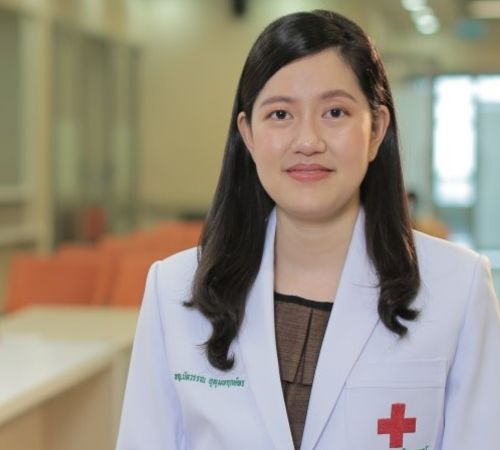
Dr Nattawan Utoomprurkporn | Chulalongkorn University
UK Project lead:
-
Professor Doris Bamiou | UCL
Industry partner:
-
Eartone(Thailand)Co;Ltd
This research project focused on further developing advanced software and mobile applications for self-hearing checks by collaborating with Eartone (Thailand) Co., Ltd. The aim was to enable users to conveniently conduct hearing tests at home using Android and iPhone devices. Building upon the success of previous funding in 2021, the project:
- Tested the AI technology embedded within the app for self-hearing checks, comparing its efficacy against tests administered by medical professionals.
- Investigated the acceptability of older individuals in Thailand regarding the use of the app for self-hearing checks. Community acceptance plays a pivotal role in fostering widespread application adoption.
- Analysed key predictors of hearing ability among older Thai adults by leveraging data collected from the mobile application to identify optimal testing conditions.
The app is designed to be user-friendly, enabling anyone to conduct a screening hearing test on themselves. The project promoted the app through workshops aimed at encouraging individuals to monitor their hearing health. Additionally, there are plans to make the app available in multiple languages and expand its usage to other countries, including the UK and Southeast Asian nations.