
Meet our alumni from Jordan
Explore the inspiring projects in Jordan funded through Transforming Systems through Partnership (TSP) grant calls below. These projects received up to £50,000 each for a year of research collaboration and knowledge sharing between Jordan and the UK. All projects were supported in partnership with the Jordanian Higher Council for Science and Technology's Industrial, Research, and Development Fund (IRDF), with funding under the UK government’s International Science Partnership Fund.
This grant is now closed.
Integrating environmental technology solutions for developing a circular economy for olive mill waste system
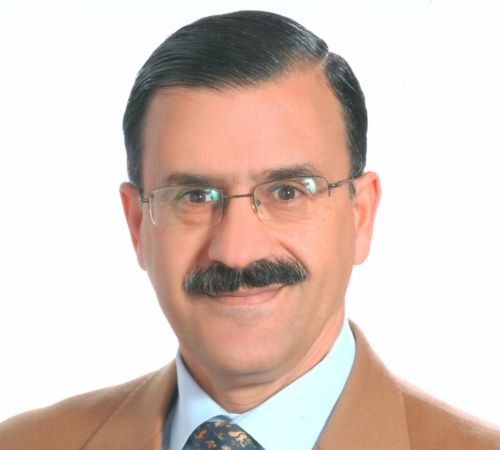
Professor Mohammed Matouq | Al-Balqa Applied University
UK Project lead:
-
Dr Abhishek Tiwary | Demonfort University
Industry partners:
-
Al Jazzazi Mills
-
Ecco Stove Ltd
Other partners:
-
The University of Jordan
-
Jordan University of Science and Technology
Improved management of Jordan's olive mill waste, mainly olive mill wastewater (OMW) and solid pomace, is vital for the country's growing olive industry and meeting UN Sustainable Development Goal 6 targets. This one-year UK-Jordan bilateral project buildt on successful lab-scale evaluations, focusing on photo-Fenton (UV-assisted) OMW treatment technology, showing a high reduction potential for phenols and Chemical Oxygen Demand (COD) of over 99%. However, challenges in scaling and affordability were noted. The project integrated complementary environmental technologies to make the photo-Fenton technology viable at an industrial scale. It had three strands: environmental technology integration and scaling-up, technology optimisation and resource/energy recovery, and techno-economic feasibility and knowledge transfer. Key outputs included a techno-economic performance report on the industrial-scale integrated OMW treatment system, a demonstrator of an environmental technology solution based on circular economy principles, and sensitisation of stakeholders to the circular economy potential. This project aligns with Jordan's sustainability goals, aiming to revolutionise olive mill waste management for the country's process industry.
Low-cost manufacturing and formulation via sustainable automated reactor platforms
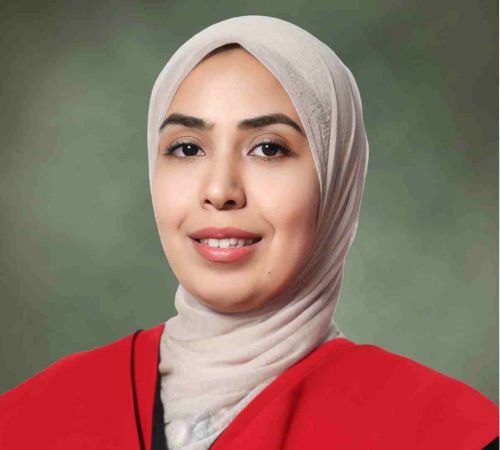
Dr Shorooq Abukhamees | The Hashemite University
UK Project lead:
-
Dr Maximilian Besenhard | UCL
Industry partners:
-
Ram Pharma | Centre for Press Innovation
-
CPI
The project developed affordable and sustainable technologies to improve medication adherence among paediatric patients. It focused on reformulating medications with unpleasant tastes, especially crucial for infants, children, and the elderly who struggle with swallowing pills. These patient groups require age-appropriate, palatable dosage forms for precise dosing. Suspensions, containing finely dispersed drug particles, offer potential for taste-masking while preventing issues like clumping. Achieving effective taste-masking demands precise control of mixing, pH, temperature, and solvent composition, alongside film-forming ingredients such as polymers and flavourings. However, navigating these complexities poses significant challenges, resulting in a shortage of taste-masked paediatric formulations. To tackle this, the project collaborated with academic and industrial experts specialising in reactor design, particle engineering, automation, high-throughput experimentation, material characterisation, formulation development, and pharmaceutical manufacturing.
Reassuring the safety of treated pharmaceutical industrial wastewater for reuse in Jordan using innovative nature-based solutions
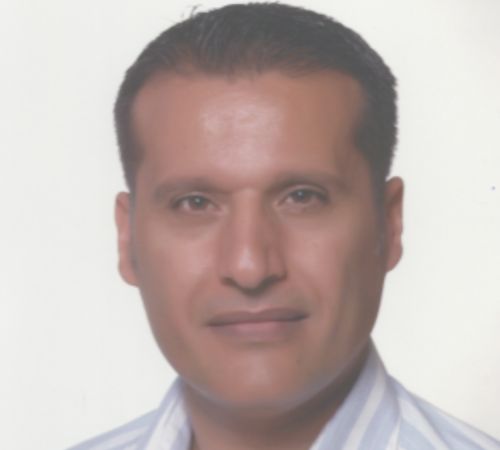
Dr Othman Almashaqbeh | Royal Scientific Society
UK Project leads:
-
Dr Tao Lyu and Dr Gabriela Dotro | Cranfield University
Industry partners:
-
Joswe Medical
-
Dar Al Dawa
After completing the TSP project (TSP2021\100376, 2021-2023), the team developed innovative constructed wetland (CW) technologies to treat effluents from two Jordanian pharmaceutical industries. Two mesocosm systems showed excellent treatment performance, detailed in peer-reviewed journal articles, conference proceedings, and media reports. Although two pilot-scale systems were constructed, long-term monitoring and cost analysis are needed for full-scale applications.
This project advanced these achievements by obtaining evidence supporting nature-based solutions for treating pharmaceutical wastewater. Two existing pilots were monitored for one year, aligning with the Jordanian water reuse standard JS202/2007 (WP1). The project also assessed antimicrobial resistance (AMR) in treated effluent (WP2), conducted cost-benefit analyses, and offered training on wetland design to stakeholders (WP3). Additionally, with industry and governmental support, funding was sought for full-scale implementations (WP4). Outputs included a research article, policy recommendations, a technology prototype, and an application to USAID-IAF for real-world use.
Hydrogen-based green engine enhancement
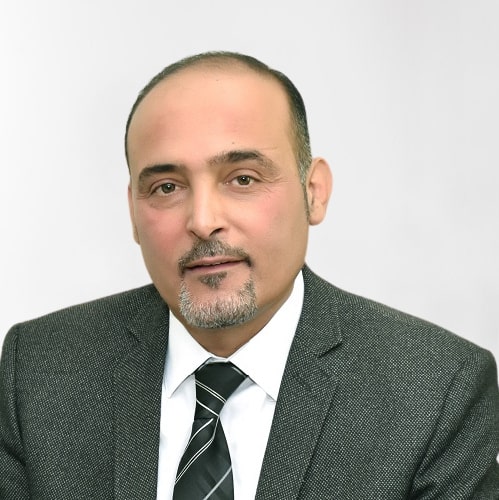
Professor Ammar Rousan | Yarmouk University
UK Partner:
-
Dr Abed Alaswad | Aston University
Industry partner:
-
Ferasah Engineering Co.Ltd
Other Partner:
-
The University of Jordan
To transform Jordan's transportation sector towards a more sustainable future, this project developed technology to reduce pollutants, fuel consumption, and enhance efficiency in internal combustion and diesel engines using hydrogen fuel. Electrolysis reactions generate hydrogen, which when combined with oxygen (HHO), were fed into the combustion chamber to potentially reduce emissions and improve efficiency. Targeting Irbid, Jordan's largest city, the project aimed to install the developed technology in municipal vehicles to enhance engine efficiency and reduce emissions. Additionally, it included thorough process modelling to optimise the HHO unit and capacity for different engine ranges, along with real-world testing to measure emissions and analyse power and fuel consumption.
Sustainable Monitoring and Advanced Real-Time Energy Efficiency (SMARTEE): Pioneering IoT submetering in pharma manufacturing

Hussam Jihad Khasawneh | Al Hussein Technical University
UK Project lead:
-
Dr Maria Tareen | Coventry University
Industry partners:
-
RAM Pharmaceuticals Ind.Co,Ltd
-
SAM Engineering & TradeCo.,Ltd.
The SMARTEE project enhanced energy management in the industrial sector by leveraging advanced IoT-based electrical monitoring systems. Collaborating with industry, innovation centres, and academic partners from the UK and Jordan, the project team designed, developed, and deployed a tailored submetering system, facilitating real-time energy insights and promoting efficient energy consumption. Through a series of visits, workshops, seminars, and apprenticeship programmes, the project fostered knowledge exchange, upskilled professionals, and engaged students in hands-on experiences. The joint research initiatives further analysed energy data, providing actionable insights to optimise energy usage.
Main outputs include:
-
A detailed and industry-aligned IoT-enabled submetering system blueprint, tailored to the factory's energy consumption patterns.
-
Comprehensive workshop materials, apprenticeship programs for students, and an upskilling crash course for professionals, all designed to foster knowledge exchange and enhance professional skills in energy management.
-
A comprehensive research report/publication detailing the analysis of energy consumption data from the submetering system, highlighting inefficiencies and proposing actionable improvement strategies.
Fostering clean energy transition in Jordan: Utilising energy storage technologies and integrating demand side management.
Dr Khaled Alawasa | Mutah University
UK Project lead:
-
Dr Adib Allahham | Northumbria University
Industry partners:
-
NEPCO
-
Philadelphia Solar
-
Sadeem Solar Systems
Other Partners:
-
Tafila Technical University (TTU)
-
Applied Science Private University (ASU)
The previous project centred on examining the economic and environmental roles of Energy Storage Systems (ESS) in Jordan. The impetus for this follow-on project stemmed from feedback and insights garnered during past endeavours, and encompassed several aspects concerning capacity building in energy storage, demand-side management, and grid stability, drawing upon insights from the existing energy storage system. The primary aim was to facilitate a transition towards clean energy in Jordan by harnessing energy storage technologies and incorporating demand-side management.
Objectives included:
-
Developing a comprehensive training programme to enhance the expertise of energy storage professionals and stakeholders in Jordan.
-
Analysing the performance of current energy storage systems to enhance efficiency and reliability.
-
Conducting a stability analysis of energy storage integration within the Jordanian power system.
-
Exploring the impact of Demand Side Management (DMS) on advancing clean energy usage comprehensively.
Exploring the potential of economic and environmental impact: Cost savings throughout the lifecycle of pre-installed solar PV panels employing nanofluid and water cooling

Dr Munzer Ebaid | Philadelphia University
UK Project lead:
-
Dr James Roscow | University of Bath
Industry partners:
-
Wathba Investment Company
Other Partner:
-
Dr Ayoup Ghrair | Al-Balqa Applied University
This study explored cost-saving methods for pre-installed solar photovoltaic (PV) panels using nanofluid and water-cooling technologies. Through a detailed economic analysis covering installation, maintenance, and operational costs, it compared traditional cooling systems with innovative alternatives. Initial findings from phase one indicate improved energy efficiency and increased electricity generation. Moreover, these cooling methods lower operating temperatures, prolonging panel lifespan, and reducing environmental impact. The study suggests that the environmental benefits outweigh potential drawbacks, supporting their adoption. The outcomes aim to inform policymakers, industry stakeholders, and investors about integrating these technologies into solar PV panels, promoting economic efficiency and environmental sustainability in renewable energy.
This collaboration between Philadelphia University, Al-Balqa Applied University, and industrial partner Wathba Investment Company, along with the University of Bath in the UK, seeks to leverage expertise in the field. Expected outcomes included cost savings, sustainability, and reduced emissions, with results disseminated to PV plants, academia, and the industrial sector to enhance energy efficiency and environmental friendliness.