
Nepal's expanding market
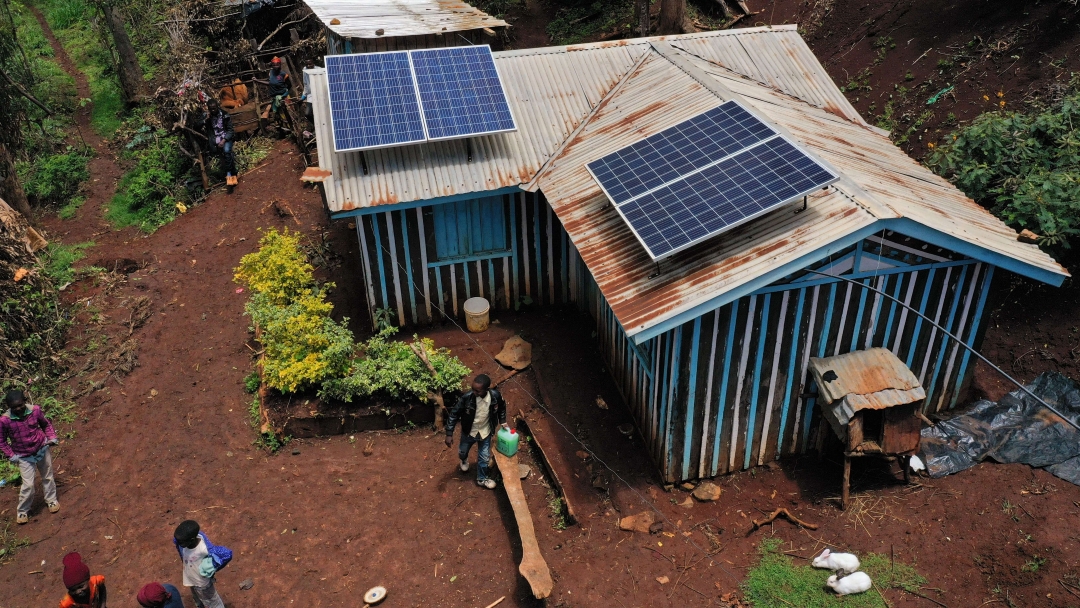
Nepal’s solar photovoltaic (PV) market has expanded from off-grid systems to growing rooftop and utility-scale deployment, with about 146 MW ground-mounted and 25 MW rooftop/off-grid installed, plus a pipeline of approximately 960 MW.
Growth is driven by falling costs, rising demand for reliable power, and supportive policies. The market is shifting from subsidy-based access to commercial rooftop solar, with typical payback periods of 4-5 years.
Key implementing agencies include the Alternative Energy Promotion Centre (AEPC) and the Nepal Electricity Authority (NEA), supported by development partners. However, while solar deployment is well supported, there is no dedicated framework for PV end-of-life (EoL) management, and solar waste is not yet tracked or regulated.
Current PV EoL practices
- Informal disposal dominates: No formal PV collection or recycling system exists with panels often being stored, dumped, or abandoned.
- Battery recovery is partial: Lead-acid batteries are sometimes collected informally or exported, but hazardous residues are poorly managed.
- No clear regulation: Existing waste laws do not cover PV specifically. Responsibilities are fragmented and weakly enforced.
- Import-dependent market: No domestic recycling industry or take-back schemes - informal sector handles most material recovery.
- Environmental and health risks: Improper disposal leads to soil and water contamination, toxic exposure, and impacts on vulnerable communities.
Market strengths
- Policy and Institutional: Growing recognition of the issue in stakeholder dialogues and some development partner programmes beginning to consider CEE principles.
- Industry and market: Leading private solar companies and developers express moral responsibility and willingness to collaborate on EoL solutions if a clear framework is established.
- Circular economy and waste: Existence of informal recycling networks for lead-acid batteries and metals, which could be formalised and trained.
- Community and social: High levels of local technical skill in PV system installation and maintenance, providing a base for training in safe decommissioning.
Market challenges
- Technical: Complete lack of PV panel and Li-ion battery recycling technology and infrastructure in Nepal. Widespread use of substandard components shortens product life.
- Economic: No viable business model for formal recycling due to low current waste volumes, high costs and lack of market for recovered materials (for example silica glass).
- Regulatory and institutional: Critical absence of PV-specific EoL regulations, EPR mechanisms, limited product standards, and enforcement capacity.
- Knowledge and data: No national inventory of installed PV systems or generated waste. Extremely low awareness of EoL hazards among consumers, installers and policymakers.
- Supply chain: Complex, import-dependent supply chain with no producer responsibility. Informal sector handles hazardous waste without safety protocols.
Opportunities for improvement
Immediate (1 to 2 years)
Leverage high stakeholder concern to initiate multistakeholder dialogue. Use existing academic institutions for preliminary research and awareness campaigns.
Medium term (3 to 5 years)
Develop and pilot a decentralised collection model in partnership with local government and the private sector. Draft a PV-specific EPR regulation applicable to the PV suppliers, installers and manufacturing companies.
Long term (5+ years)
Establish a formal recycling ecosystem, possibly through regional collaboration, integrating PV waste into a national CEE strategy.
Priority actions
- Conduct a national PV waste flow study: Led by academia (Kathmandu University (KU), Institute of Engineering (IOE), Nepal Academy of Science and Technology (NAST)) with AEPC, to quantify existing and future waste streams and map disposal practices, creating an evidence base for policy.
- Develop and pilot a decentralised collection system: Partner with municipalities, private companies, and local governments to establish certified collection points for EoL PV components, starting in major urban and industrial hubs.
- Formulate and enact an EPR framework for solar PV: Mandate importers, manufacturers, and installers to finance and manage the collection and environmentally sound processing of PV waste, integrating it into national e-waste policy.
- Launch capacity building and awareness programmes: Train PV technicians, installers and informal waste collectors on safe decommissioning, handling and hazards. Run public campaigns on responsible disposal.
- Foster public–private partnerships for pilot recycling: Incentivise the private sector with blended finance (grants, concessional loans) to establish small-scale, technologically appropriate pilot facilities for processing specific streams such as lead-acid batteries or aluminium frames.
- Strengthen quality and standards enforcement: Empower RETS and the Nepal Bureau of Standards & Metrology (NBSM) to rigorously enforce import standards to extend product lifespans and reduce premature waste.
- Align development partner funding with circularity: Engage DPs (GIZ, UNDP, ADB, WB) to earmark funding within energy projects for EoL management components, supporting research, pilot projects and policy development.